3D Spider and Spider Flowers Templates: A Comprehensive Review for Seasoned Creators
The crafting landscape has shifted significantly in recent years, moving from simple paper cutouts to intricate, multi-dimensional designs that require precision and versatility. For professionals, small business owners, and serious hobbyists alike, the 3D Spider and Spider Flowers Templates package represents a specific solution for seasonal decor, educational projects, and commercial event styling. This collection is not merely a set of images; it is a functional toolkit designed to bridge the gap between digital design files and physical, tangible art.
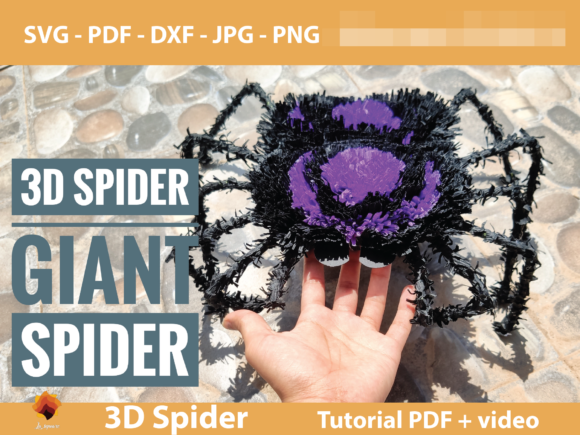
When evaluating this resource, the primary value proposition lies in its format diversity. The package includes PDF, SVG, DXF, PNG, and JPG files, alongside both tutorial PDFs and video guides. This comprehensive approach addresses the fragmented nature of the current DIY market, where users often struggle with incompatible file types or lack the technical know-how to execute complex cuts. By consolidating these assets into one cohesive download, the creators have streamlined the workflow for everyone from Cricut enthusiasts to manual crafters.
Technical Versatility Across Cutting Platforms
One of the most critical factors in selecting a digital template package is compatibility with existing hardware. The 3D Spider and Spider Flowers Templates are engineered to function seamlessly across the two dominant cutting machine ecosystems: Cricut and Silhouette. The inclusion of DXF files ensures that users who rely on Silhouette Studio can import and manipulate their designs without conversion errors, while the SVG formats are optimized for the Cricut Design Space environment.
For those working with complex geometries, such as the interlocking layers required for 3D flowers or the delicate webbing of spider nets, the SVG format is the superior choice. Vector-based SVG files allow for infinite scaling without loss of resolution, ensuring that a design created at a small size retains its crisp edges when expanded to a large format. Conversely, the DXF format offers robust support for machines that may not fully support proprietary vector layers, providing a reliable fallback for consistent cutting results.
It is worth noting that for users who prefer traditional methods or lack access to a cutting machine, the package provides high-resolution JPG and PNG downloads via a secure drive link. These raster images serve as excellent templates for hand-cutting with scissors or knives. This flexibility means the product does not alienate non-digital crafters, expanding its utility to classrooms, community centers, and home environments where technology might be limited.
Structural Integrity and Design Complexity
The core appeal of this package is the transition from flat patterns to three-dimensional structures. Creating 3D paper flowers and spider webs requires more than just a pretty outline; it demands precise scoring lines, tab placements, and structural logic. The quality of the 3D Spider and Spider Flowers Templates is evident in how well these elements are defined within the files.
In practical application, the difference between a flimsy decoration and a professional display often comes down to the template's construction. These designs appear to account for the physics of paper, including weight distribution and tension. When assembling the flowers or the spider motifs, the user should expect clean fold lines that hold their shape under gravity. This attention to structural detail is particularly important for entrepreneurs selling handmade decor, as the durability of the final product directly impacts customer satisfaction and brand reputation.
The inclusion of spider net templates adds another layer of complexity. Nets require radial symmetry and consistent spacing to look realistic rather than chaotic. The templates likely provide the necessary geometric guides to achieve this uniformity, saving hours of manual drafting time. For educators or event planners creating immersive Halloween displays or autumnal centerpieces, this level of pre-planned geometry is invaluable.
Scalability and Project Flexibility
A common limitation in many template sets is the fixed size of the output. However, the 3D Spider and Spider Flowers Templates are marketed with a scalable range extending from XXS to XXXL. This capability transforms the product from a single-use item into a versatile asset for various project scales.
- Small Scale (XXS-XXL): Ideal for scrapbooking, greeting cards, jewelry making, or detailed classroom decorations where fine motor skills and small materials are the focus.
- Medium Scale: Perfect for party favors, table runners, and standard wall hangings suitable for residential use.
- Large Scale (XXXL): Essential for stage props, window displays, storefront decorations, and large-scale installations where visibility from a distance is required.
This scalability is achieved through the vector nature of the source files. Users can resize the design in their software to any dimension before sending it to the cutter. For businesses producing bulk orders, the ability to switch from a medium-sized flower to a giant installation piece using the same base file reduces overhead and inventory complexity. It allows a single purchase to serve multiple revenue streams or project requirements.
Educational Value and Workflow Integration
Having the correct file is only half the battle; understanding how to assemble it is the other. The package distinguishes itself by including both a tutorial PDF and a video guide. In an era where video content often lacks depth or audio clarity, the inclusion of written instructions suggests a commitment to accessibility for different learning styles.
For professionals and freelancers, time is a currency. The presence of step-by-step guidance minimizes the trial-and-error phase usually associated with 3D assembly. This reduces material waste and accelerates production times. Furthermore, the video component serves as a visual aid for complex folding techniques that might be difficult to describe textually. This dual-format approach ensures that even users with varying levels of technical proficiency can achieve professional results.
The tutorials also act as a troubleshooting resource. If a user encounters issues with alignment or adhesion, the provided guidance likely covers best practices for gluing, scoring, and finishing. This support system enhances the long-term value of the purchase, ensuring that the templates remain useful tools rather than one-off experiments.
Target Audience and Practical Application
Who benefits most from the 3D Spider and Spider Flowers Templates? The answer spans several distinct groups within the creative economy.
Serious Hobbyists and Makers: Individuals looking to elevate their holiday decor beyond store-bought options will find the customization potential here unmatched. The ability to change colors, sizes, and arrangements allows for unique creations that reflect personal style.
Small Business Owners and Entrepreneurs: For those selling handmade goods on platforms like Etsy or at local markets, efficiency is key. These templates offer a repeatable process for generating high-quality products. The consistency provided by the digital files ensures that every flower or spider web sold meets a specific standard of quality.
Educators and Event Planners: Teachers planning thematic units or event coordinators managing large gatherings need resources that are easy to distribute and execute. The variety of file formats allows for collaborative projects where some participants use cutting machines while others work manually.
Digital Marketers and Content Creators: Bloggers and publishers focusing on DIY crafts can utilize these templates as part of their content strategy. They can create "how-to" articles, social media posts, or video series based on the assembly of these specific designs, driving traffic and engagement to their platforms.
Considerations and Limitations
While the 3D Spider and Spider Flowers Templates offer significant advantages, a balanced evaluation requires acknowledging potential limitations. The complexity of the 3D assembly, while rewarding, does demand patience and dexterity. Users expecting instant gratification without any learning curve may find the process slower than anticipated. Additionally, the success of the final product is heavily dependent on the quality of the paper used. Thin cardstock may not hold the 3D structure well, while heavy stock might be difficult to score and fold accurately. Selecting the appropriate material is a crucial step that falls outside the scope of the digital files themselves.
Furthermore, while the video tutorials are a strong addition, they require internet access for streaming or downloading. In environments with poor connectivity, the PDF guides become the primary resource, which underscores the importance of having both formats included in the package.
Final Assessment
The 3D Spider and Spider Flowers Templates package stands out as a robust, multi-functional resource for anyone involved in paper crafting. Its strength lies in its adaptability, offering solutions for digital cutters, manual crafters, and everything in between. The provision of multiple file formats, coupled with comprehensive instructional materials, demonstrates a deep understanding of the diverse needs of the modern creator.
For professionals seeking reliability and efficiency, and for hobbyists desiring a challenge that yields impressive results, this template collection delivers tangible value. It moves beyond simple novelty items to provide a structured framework for creating high-quality, dimensional art. Whether for a small classroom project or a large commercial installation, the flexibility to scale from XXS to XXXL ensures that the investment remains relevant across a wide array of applications. Ultimately, the true measure of this product is its ability to transform a simple sheet of paper into a sophisticated, three-dimensional statement piece.